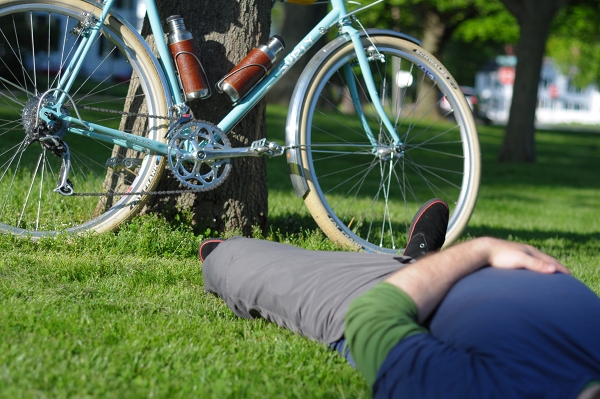
 For the past month I've been cycling about 120 miles per week, not counting transportation. And as someone who is completely new to the concept of "training" (i.e. cycling with the goal to become faster, better uphill, and so on) I've been struggling with how to structure my rides. Last year the very notion of structure would have seemed completely ridiculous: I would simply go off on my bike whenever I had the time. But last year I never cycled the way I do now, never exerted myself to such an extent repeatedly. Now everything is different, and I feel completely lost in this new territory.
One thing I've realised, is that if I do strenuous rides for more than two days in a row, on the third day my performance starts to get worse rather than better. Even if I don't think that I feel tired, it's as if my legs stop working properly. If you're an athlete, you are probably thinking "well, duh!" but to me this was a novel discovery. The idea of needing to rest and recover in order to improve did not have meaning until I physically experienced it.
What I am trying to figure out now is, what exactly does resting and recovering entail? Some advise that on days off, you absolutely must do "recovery rides" - 15-20 mile rides at an easy pace on fairly flat terrain - and that not doing them will result in stiff muscles and make it even more difficult to ride the next day. Others advise that on days off, you need to stay off the bicycle completely and just basically lounge around and eat so that your system can fully recover. Unless I am misinterpreting (which is entirely possible), these two points of view seem at odds with one another. So which is applicable under which circumstances?
Having tried both methods, I am still not sure which works better. I am also not sure whether transportation cycling (on an upright bike) is considered a type of recovery ride, or whether it's considered not cycling at all. Given that it activates a different set of muscles I suspect the latter, but I could be wrong. None of this stuff is intuitive for me, which makes it both frustrating and fascinating.



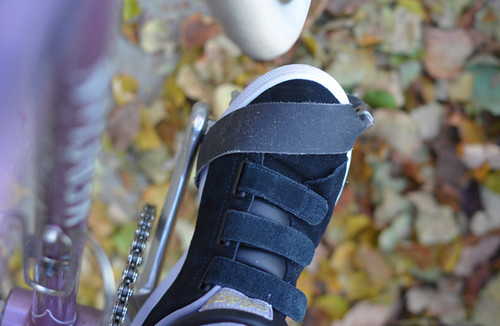 For those of us who don't use clipless pedals on our roadbikes, it would seem that the issue of cycling shoes is simple: Just ride in whatever shoes you like. However, at least for me it doesn't really work that way. The shoe has to feel right to cycle in, or I am miserable on a long ride.


 Anyway, to continue my earlier post about a sneak peak to ‘Brew You Ride’ and ‘Heineken Beer Tasting’, see below a summary of the tour I did at the Heineken Brewery in Amsterdam.


 The old Heineken brewery plant and its original copper tanks. Just beautiful, is it not?


 Games. There was also a facility to record a singing Dutch video or take a foto and send it online direct to your friends! And at the end of the tour is this bar for free Heineken drinks.
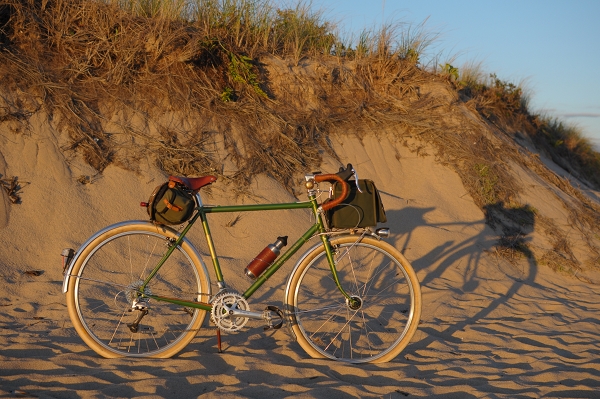 It can be said that one reason people enjoy commuting or traveling in a car, is that the car functions as an extension of their home while they are away at work or on the road. They keep a myriad of personal belongings in the car - from food and drinks, to changes of clothing and footwear, to reading material and selections from their music collection. Those who have children or pets often have toys and other objects associated with them scattered in the back. And then of course there are the familiar smells: Whether good or bad, the interior of a car takes on a distinct scent associated with its owners' activities and lifestyle. In essence, the car really does attain aspects of the driver's home over time, and this undoubtedly contributes to the emotional attachment many feel toward their vehicles. The Co-Habitant's dayjob involves extremely long shifts (12 hours is typical), and his colleagues routinely nip out to the car during breaks to retrieve various items and drop other items off. To do so is comforting when away from home for so long. This is also why the Co-Habitant equipped his Pashley with both a saddlebag and handlebar bag, despite a relatively short commute: It was important to create a similar "homey" environment for his bicycle.
 In my earlier post about handlebar bags, I mentioned the appeal of the idea that the bicycle can be turned into a mobile home - ready to go anywhere while still allowing the cyclist to feel as if their life is coming with them, rather than being abandoned. Now that I have installed a handlebar bag on my own bicycle and have found myself in a situation where turning said bicycle into a mobile home is necessary, I truly understand what this feeling is like. While on Cape Cod, we are typically away from home from morning till late evening - during which time we work, go on rides, and do various things in town. All of those activities require different items to be taken along, including clothing, equipment and food. At this time of the year, there are also significant fluctuations in temperature in the course of the day (mid 40s- upper 80s) which must be taken into consideration. To my delight, the combination of a roomy handlebar bag and saddlebag can accommodate all of these concerns.
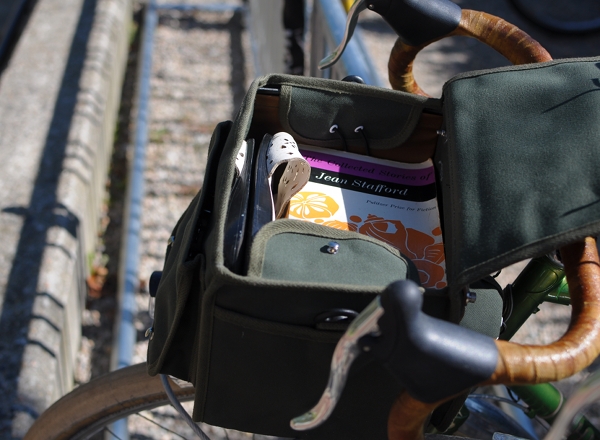 Typical contents of my handlebar bag: sweater, down vest, 2 extra hats, waterproof jacket, costume for photo shoot, props for photo shoot, make-up, shawl to use in leu of beach blanket, swim suit, flip-flops, extra pair of socks, 2 books, notebook, pen case with 2 pens, bar of chocolate, gloves, sunscreen, deodorant, DZNuts, saddle cover, money and ID. Notice that the bag is not even full.
 Typical contents of my saddle bag (now converted into a camera bag) are our photo equipment: This time, a digital SLR, a Medium Format film camera, 10 rolls of film, and, just for fun, a toy camera. We have a second Medium Format film camera that could also fit instead of the toy one.
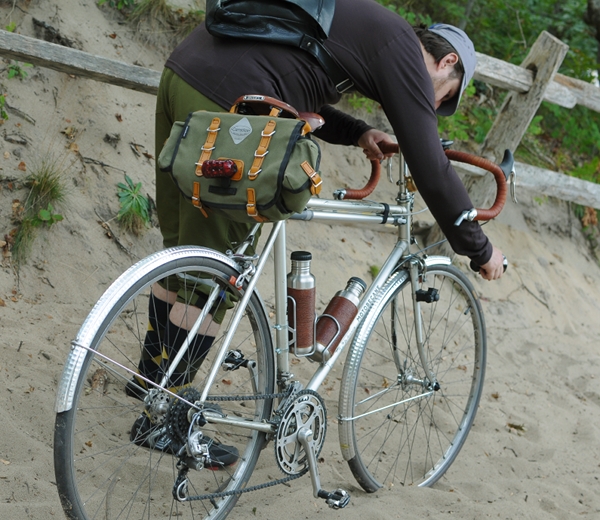 The Co-Habitant carries his own clothing, our tool kit and medical kit, and both of our laptops. He only has a single saddlebag on his roadbike, so the laptops he transports in a messenger-style bag on his person - which is the one glaring imperfection in our set-up. Next time we take a trip like this, he will have some sort of handlebar + saddlebag set-up as well, where the handlebar bag is smaller than mine, but the saddlebag is larger - the type that can fit laptops and will require a rear rack. I think that both the larger Rivendell and the Ostrich saddlebags will fit this purpose, but any other suggestions for future are welcome.
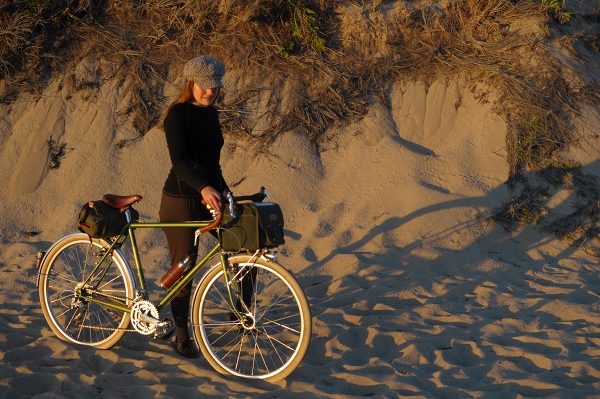 Of course, turning my otherwise lightRivendell into a "mobile home" has made it nearly as heavy as a typical Roadster - but the bike seems to handle no differently as a result. The longer I own this bicycle, the more I love it - which brings a new shade of meaning to "home is where the heart is".
 While in Corning, we stopped at the Corning Museum of Glass.
 We were not there for very long, but what we did see was great. We loved this:


