8+ miles RT
Left car: 1:15 pm
High Point: 3:40 pm
Back at car: 5:30 pm
4.25 hours car to car
I decided in the cold dry spell to make a quick run up Mount Si and see what the haystack looked like in winter with a coat of snow. Spent the morning in the gym, came home and ate lunch and then drove out.
I left the car making great time blasting through the first mile in under 20 minutes. I was looking at a sub ninety minute time to the haystack if I could keep it up. I continued with this pace until I came upon the frozen trail. At first, it seemed like packed frost or just frozen dirt, but as I went higher it became more snow and ice like reflecting where the sun hit it. Lots of nervous people coming down were sliding on their butts, grabbing trees, and using sticks for balance. I watched a guy take a spill and start cussing. I thought about donning crampons, but figured this was good practice (for what, I don't know.)
 Compacted snow on icy trail
The left hand switchbacks deeper in the woods were worse and my pace had slowed to barely a walk. I leapfrogged with another guy who was in trail runners. He seemed to have better footing, or was just more confident than me. Nearing the end of the trail, the snow was softer and we both started moving well again. We stopped to let a group head down crawling and hugging trees. He looked at me and asked, "Trade you my legs for your heart and lungs?" I guess that's a compliment, but the pace I was going for a long time on the snow didn't require much cardio work for me at all. I could have used some shorter legs and a lower center of gravity.
Up out of the woods I left everyone else behind and headed to the haystack. Apparently I was the only one with this intention who was on the mountain at this time. I moved quickly on the snow that was less compacted over to the start of the scramble. Even with the slow going on the icy trail I arrived at the base in around one hour forty five minutes. I stopped to drop my poles and put on a helmet and a jacket as I was on the cool north side. Then I started up.
 Base of the haystack
If I was going slow on the icy trail, I was hardly moving through the scramble. I made a decision to stay on the rock as much as I could. This was difficult, because not much of it was without snow or ice. With forty feet or more to the summit I made a move I didn't think I could duplicate heading down. I checked my watch, I'd have to turn around as to avoid hiking out in the dark. Things weren't going smoothly and so I pulled out my axe to add something to hold onto and picked my way down. I was glad to be back on flatter terrain. I stopped at the bench to have some snacks and call Jennifer before I started back down the trail.
 Looking down from my high point
The trail was good going at first, and then in the woods a way I just didn't like how slow I was going in an effort not to fall. I stopped and put on the crampons. Wow! I blasted down the compacted snow effortlessly, passing more sliders and tree huggers. At some point the snow started looking fairly dirty and I opted to remove the crampons. About one switchback later and the continuous ice ended. There were a few more right hand turns in the woods that were slippery, including one where I skated for five feet with incident. After that it was just a matter of hoofing it back to the car.
This was a fun trip. I have never been up Si in the winter before. The trail conditions were abysmal with the compacted snow. I'm surprised people weren't being carted out of there. I am somewhat bummed about not making the top, but I am also happy I at least made an attempt of it. I think if I started up with crampons and my axe out I could have stayed on the snow/ice and made better time, as well as feeling more secure. But from the bottom the rock looked like a good option. The higher I went the more snow and ice covered the rock making it less of an option. At my high point I contemplated donning the crampons for a summit push, but realized I had burned up too much time to that point. A second tool may also have helped, but I didn't feel like lugging one up the mountain. Being alone was a contributing factor as well. I spent almost ninety minutes without seeing or hearing another person while near the haystack.


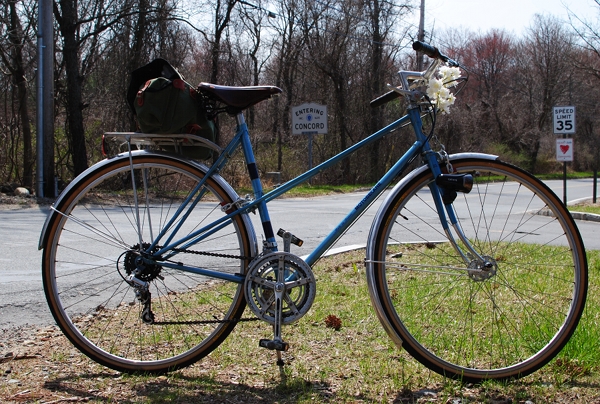 Here is
 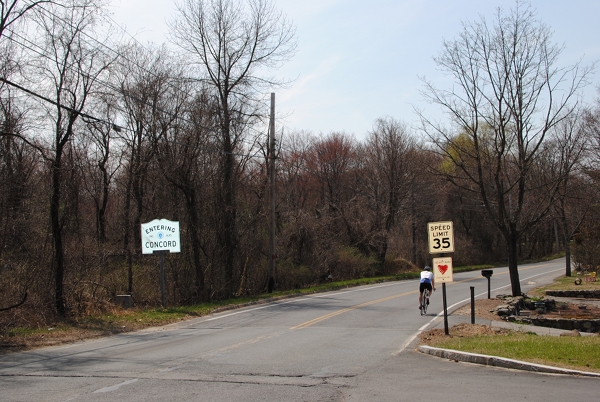 This is a popular cycling route in the Boston area. I first went through the Minuteman Trail and then cycled on the road (Route 62 W) for an additional 5.5 miles. At the end of the Minuteman Trail, I overheard a pair of road cyclists - dressed in full lycra and on super-high-tech bikes - discussing whether they should go to Concord or choose a different direction. One of them said that the route to Concord is really hilly and he didn't feel like dealing with that. This alarmed me, but I decided to start cycling in that direction anyway just to see how it is. If too hilly, I would simply turn back. Well, clearly that did not happen - which makes me wonder how to interpret the super-roadcyclist's comment. The terrain was completely manageable on a 12-speed bicycle.
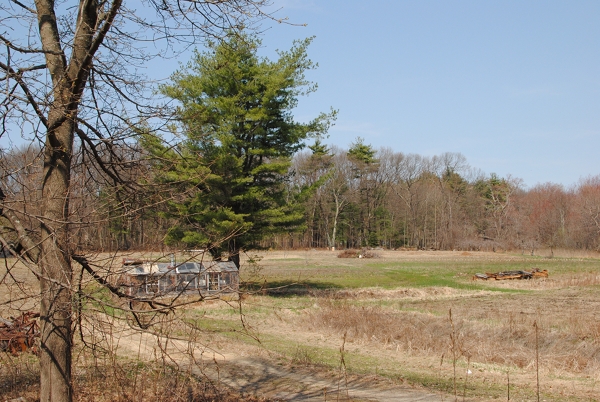 Hills or no hills, I loved cycling on Route 62. There are few cars, plenty of shade even at mid-day, fresh air, and often a shoulder to cycle on. Along the way are farms, picturesque New England houses, old cemeteries, and stretches of woods. This is my dream landscape for touring, and I wonder whether Route 62 West continues to be just as nice further West? If you are local, please let me know.
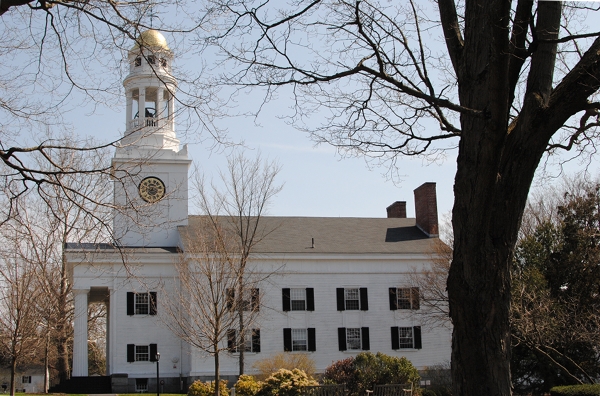 It took me about 1 1/2 hours to arrive to Concord center from my house, not counting a coffee stop along the way. Since it is an 18-mile route, this means I was going an average of 12 mph: slow and steady, which is probably a good way to start for someone like me.
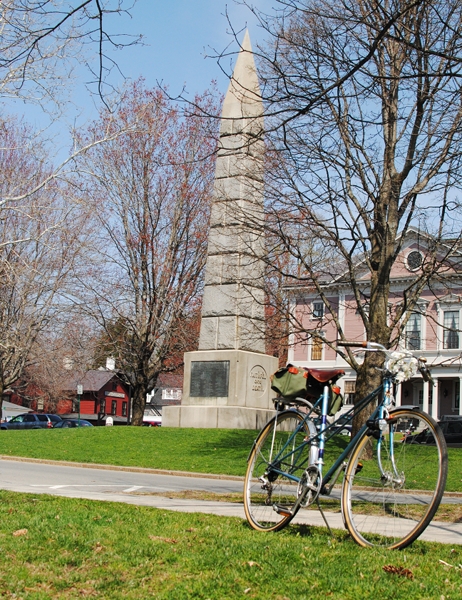 Concord, Massachusetts is a fascinating town from a historical perspective - having been home to Emerson, Thoreau and Hawthorne, among others. Its most famous site is probably Walden Pond, but I intentionally did not cycle in that direction because I want to visit it with the Co-Habitant. Instead, Marianne and I explored the town center.
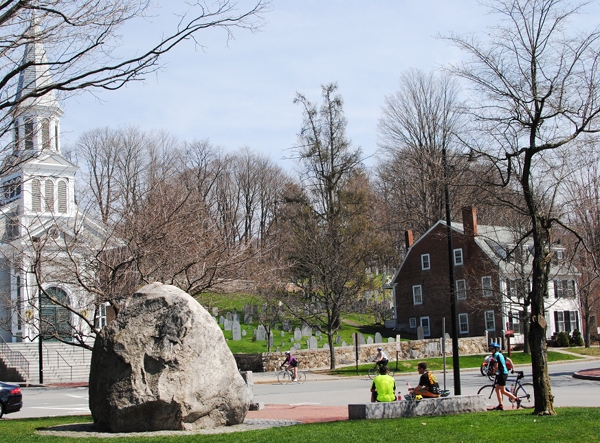 It was Easter Sunday, and the people out on the streets were an amusing mix of churchgoers in their Sunday best and cyclists in skin-tight black and neon lycra.
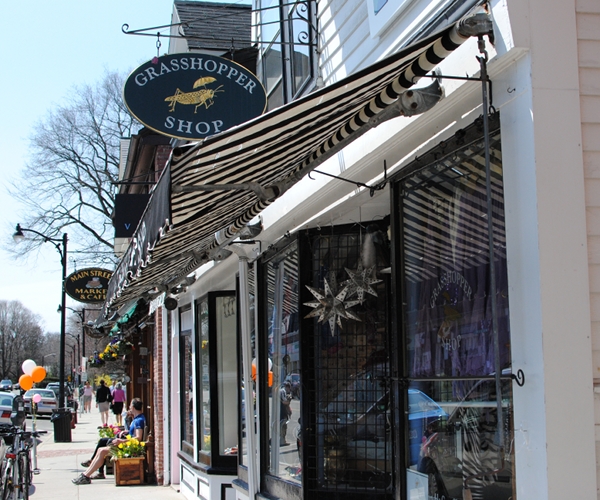 The mood in the town center was festive.
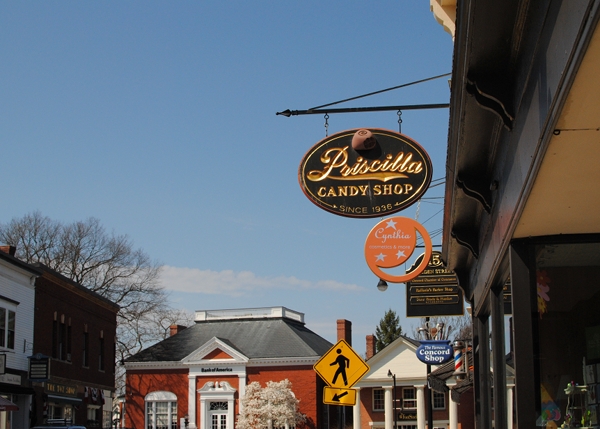 No businesses were open except for a couple of cafes, but it was fascinating just to walk around the streets and observe.
 For such a tiny town, Concord is home to a staggering number of churches. I think there were close to a dozen in the center alone.
 Aside from churches, I noticed an abundance of landmark signs that refer to things that were once in that spot, but no longer are: trees that have been felled, streams that have been drained and built upon, mills and historical homes that have been demolished, etc.
 There is a feeling of living in the past that the town seems to intentionally embrace - from the quaint storefronts on Main Street, to other nostalgic details here and there, like this antique bicycle next to a popular food market. I wonder whether the area around Walden Pond has a similar feel to it. Hopefully we will visit there soon.
 After spending about an hour and a half in Concord, I headed back - via Route 62 again and then the Minuteman Trail. Not much was in bloom along the trail yet, but it was good to be there for the first time since November. Despite it being Easter Sunday, the path was not too crowded and I returned home in good time.
 For my first mini-tour involving road cycling and a specific destination, I thought this went well. I ate at well-spaced intervals and did not get tired. In general, I feel that my endurance of long rides is determined more by comfort than physical ability: pain begins to bother me before I have the chance to grow tired. In the past, the major problems were saddle discomfort (the Brooks Flyer Special refused to break in no matter what), handlebar discomfort (too much weight placed on the hands would result in pain), and generally feeling not entirely in control of this bicycle. The control problem has been solved now. And after the latest raising of the saddle, the Flyer feels much better. The handlebars remained an issue simply because the mountain bike hand position of the Milan bars is not good for long rides. My hands did not go numb during this trip, but I felt that it would happen soon if I kept going. I have now found a solution to this, and will write about it in the next post.


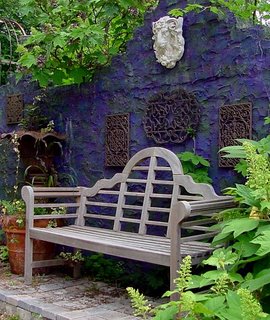
 Today Eustacia Vye (my
 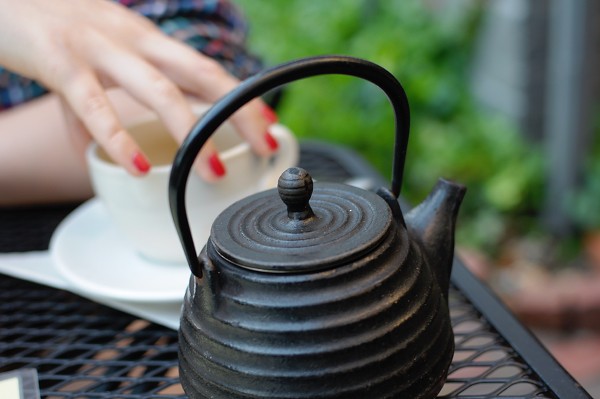 Margo and I tagged along and sat at an outdoor cafe while the bikes frolicked nearby.
 The
The 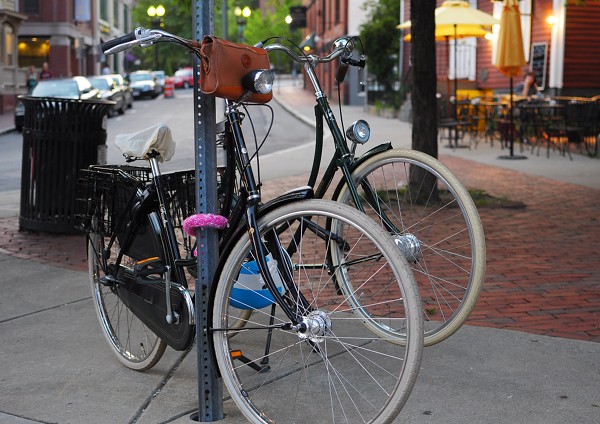 Despite their differences in wheel size (28" on the Batavus Fryslan vs. 26" on the Pashley Princess), we were surprised to note how similar Frida and Eustacia looked, including their overall proportions. My handlebars are set quite a bit lower, but that was an intentional modification on my part. Margo prefers hers higher. The bicycles also have matching cream tires, matching Brooks B66S saddles, and matching
 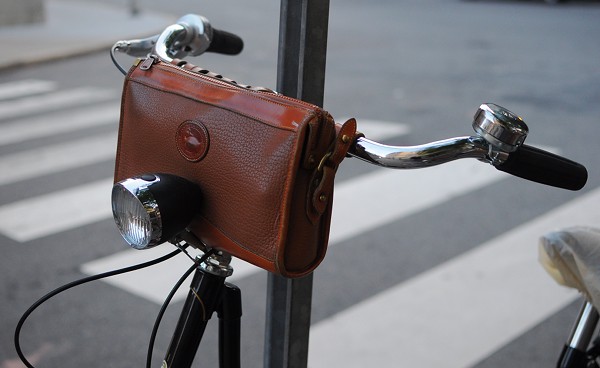 One really cool thing about Frida is the DIY handlebar bag. It is a small leather purse, with the strap wrapped around the flat part of the bars.
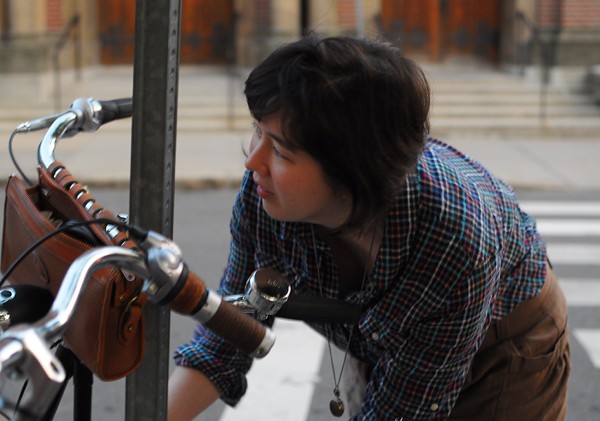 Here you can see the handlebar attachment. A simple and elegant idea that shows you don't necessarily need to spend tons of money on bike-specific accessories.
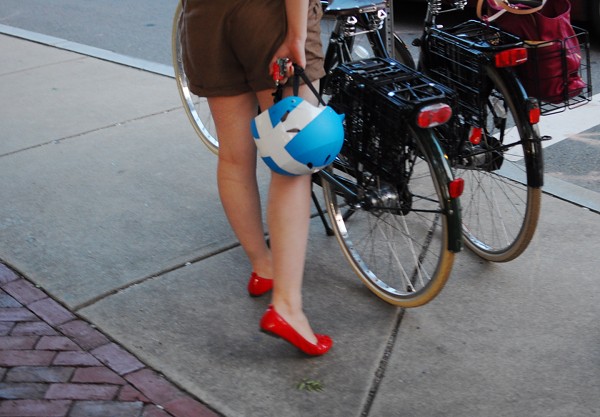 At the end of the evening, Margo test-rode my bike while I carefully tried hers on for size (Frida is new and I was too worried about her well-being to ride her on the street).
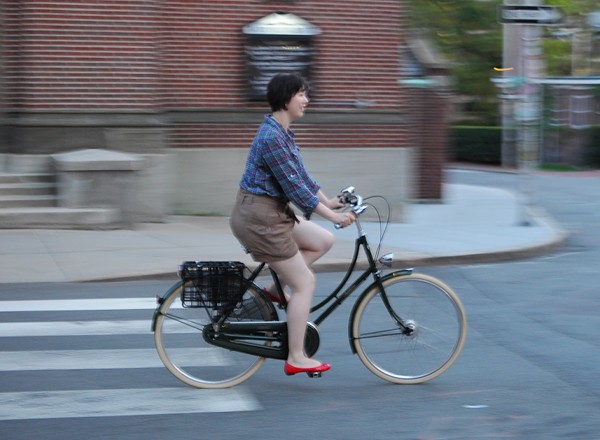 Margo on my
 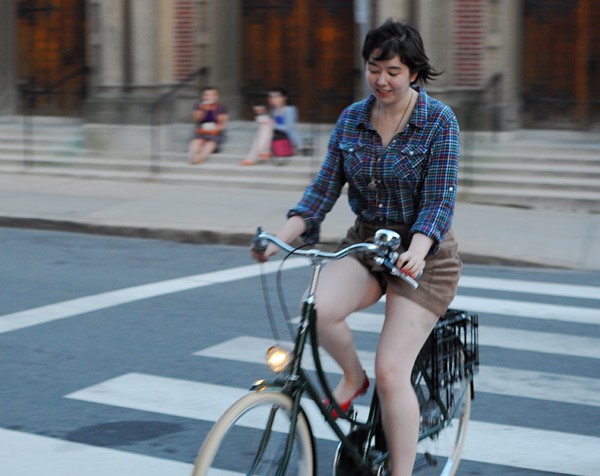 My own impression is that the fit of the two bikes is similar, but the
  Here is to lovely bicycles and to lovely bicycle friendships!
 My neighbors dogs playing in the snow. A few years ago I bought one of the


 With all the talk about skyrocketing costs of airplane tickets for Thanksgiving, many people I know have decided to stay home this year and keep it low key. But rather than being upset about it, they seem relieved: A casual Thanksgiving with the immediate family instead of a full-on family reunion and hours spent in airports? The very idea seems to be an instant de-stresser.
 Mae was the adopted daughter of William James Dunfee and his wife, Mary Elizabeth Walker. Jane is my grandmother's sister, Hazlette is my grandmother, and Mercides is the object of my quest in unraveling a little mystery. It's a guess, but I'd say the picture was taken about 1918-1920.
 The note reads:


 At first glance, it looks like Hebrew to me, but it’s not. It’s Dutch. Can you read it?